What types of assets can Keel's implementation service track?
Keel builds custom tracking systems for virtually any asset type — physical inventory, equipment, production materials, serialised items, lot-tracked goods, and multi-location stock. Because every system is built around your specific data model and workflows, there is no SKU arrangement too complicated and no asset structure too unique. We model exactly what you track and how you track it.
How long does an asset tracking software implementation take?
Most implementations go from discovery to a live, production-ready system within a matter of weeks — significantly faster than traditional enterprise software projects. The timeline depends on complexity, the number of integrations required, and migration scope. During the discovery phase, we will give you a clear, realistic timeline based on your specific requirements before any work begins.
Do I need a development team to manage the system after implementation?
No. Keel delivers full ownership to your team with clean, intuitive internal tools that require no technical training to use day-to-day. For operators who want to extend or modify the system, Keel's code-first platform is built on engineering best practices, making it straightforward for a developer to iterate on. For teams without in-house developers, Keel can continue supporting system evolution.
Can Keel integrate the asset tracking system with my existing tools?
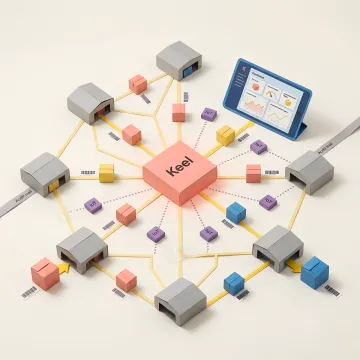
Yes. Keel's platform is built for seamless integration with your existing tech stack — including ERP systems, e-commerce platforms like Shopify and Amazon, 3PLs, financial systems, IoT devices such as smart shelves and barcode scanners, and third-party APIs. Every integration is configured specifically for your data flows and operational requirements, not bolted on as an afterthought.
What happens to our existing data during migration?
Keel offers a fully managed migration service to transition your data from spreadsheets, legacy systems, or other platforms to your new asset tracking system. We handle data mapping, cleansing, and validation to ensure accuracy before go-live. The process is designed to minimise operational disruption, and we will not switch you live until the data has been validated and signed off by your team.
Is the asset tracking system compliant with data protection regulations?
Yes. Keel (Planko Ltd) is registered with the UK data protection authority, the Information Commissioner's Office (ICO), under reference ZB524558. The platform includes built-in role-based permissions, deny-by-default access control, OpenTelemetry observability, and a complete audit log — making it well-suited to regulated industries that require strict data governance and traceability standards.
Can the system handle multiple locations and warehouses?
Absolutely. Keel's asset tracking systems are built for multi-location operations from the ground up — managing stock, equipment, and assets across as many warehouses, sites, or regions as you need. Real-time visibility is available down to bin level at every location, with transfers between locations, reservation tracking, and location-specific workflows all fully supported and customised to your setup.
How is Keel different from buying an off-the-shelf asset tracking tool?
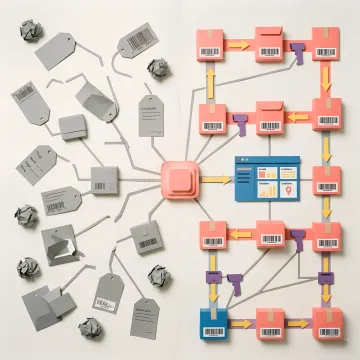
Off-the-shelf asset tracking tools force your operations to fit their rigid templates, often leaving critical workflows unaddressed. Keel builds every system around your exact process — your asset types, your naming conventions, your exception handling, your integrations. You own the system and its data outright, can evolve it as your business changes, and are not dependent on a vendor's product roadmap for features you actually need.
Is Keel's asset tracking platform for physical inventory or IT/software assets?
It's built for physical inventory and equipment, not IT or software-licence tracking. Keel builds custom tracking systems for physical inventory, equipment, production materials, serialised items, lot-tracked goods, and multi-location stock across distribution and warehouse operations, modelled around your specific asset types and workflows rather than a generic IT asset register.
Is Keel's asset tracking system registered and compliant with UK data protection law?
Yes. Keel (Planko Ltd) is a company registered in the United Kingdom and registered with the UK's data protection authority, the Information Commissioner's Office (ICO, reference ZB524558). The platform supports multi-region data residency, so you can choose where your asset data is hosted, including the UK, with role-based permissions and a complete audit trail.
Can UK teams pay in GBP, and does the system support multi-currency operations?
Yes. Keel is a UK-registered company and payments are billed in GBP, with VAT added where applicable. The underlying platform also supports multi-currency and multi-location operations out of the box, so distribution teams working with international suppliers or sites aren't forced into workarounds.