
Introduction
Selling across Amazon UK, eBay, Shopify, OnBuy and TikTok Shop at the same time creates a specific stock control problem: the same 5 units can show as "available" on every channel at once. One busy afternoon and you are cancelling orders, refunding customers and putting your marketplace account health at risk.
The stakes are concrete. Amazon suspends sellers whose cancellation rates exceed 2.5%, and eBay restricts sellers whose defect rates climb too high. During UK peak trading, from Black Friday to Christmas, a slow sync can undo months of good performance.
Multichannel inventory management software keeps one stock pool in sync across every channel. This guide compares the leading tools for UK sellers, including their £ pricing where it is published, and covers UK carriers, order fulfilment, and the VAT and accounting checks to run before you choose.
Key Takeaways
- Multi-channel inventory software syncs stock levels across all sales channels in real time, preventing overselling and manual errors
- Top picks: Linnworks (high-volume), Cin7 (omnichannel), Brightpearl (mid-market), Zoho Inventory (budget), Veeqo (published UK pricing), ChannelGrabber (UK carriers and OnBuy)
- Real-time sync is now the baseline expectation—scheduled polling creates dangerous delays during flash sales
- Evaluate based on sync reliability, platform coverage, pricing model, and 12-month growth trajectory
- Teams that have outgrown off-the-shelf options can build fully custom inventory systems in weeks with Keel
- UK sellers should shortlist tools that connect to the channels and carriers they actually use (Amazon UK, eBay, OnBuy, Royal Mail, DPD, Evri) and to Xero, Sage or QuickBooks with the correct VAT treatment per channel
- Veeqo publishes UK pricing from £17 to £246 a month depending on order volume, while Linnworks, Brightpearl and ChannelGrabber-style tools are quoted or tiered, so compare cost at your peak order volume
What Is Multi-Channel Inventory Management?
Multi-channel inventory management is the process of tracking, syncing, and controlling stock levels across multiple sales channels—marketplaces, DTC storefronts, wholesale portals, and physical retail—from a single centralised system.
Without synchronised inventory, overselling becomes inevitable. When the same 5 units appear as "available" on Amazon, Shopify, and eBay simultaneously, sellers face cancellations that damage account health. The consequences are severe:
- Amazon: Cancellation rates above 2.5% result in loss or restriction of selling privileges
- eBay: Transaction defect rates above 2% trigger downgraded store levels and selling restrictions

The 2026 Landscape
The channel landscape has never been more consequential. Key figures illustrate the scale:
- Marketplaces now account for nearly two-thirds of B2C online retail spending
- Sellers on three or more channels generate over 140% more revenue than those on fewer
The tools have kept pace. AI-powered forecasting is now standard in leading platforms, real-time event-driven sync has replaced scheduled polling as the baseline expectation, and new marketplace integrations—particularly TikTok Shop, which is now open to UK sellers—have become non-negotiable for many sellers.
Best Multi-Channel Inventory Management Software for E-Commerce in 2026
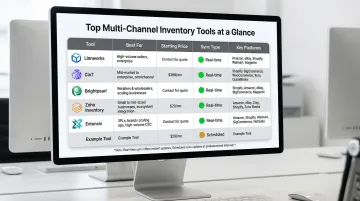
These five tools were evaluated on sync reliability, platform coverage, ease of setup, pricing transparency, scalability, and depth of ERP/accounting integration.
| Tool | Best For | Starting Price | Sync Type | Key Platforms |
|---|---|---|---|---|
| Linnworks | High-volume sellers (1,000+ orders/day) | Contact sales | Real-time | Amazon, eBay, Shopify, WooCommerce, TikTok Shop |
| Cin7 | Omnichannel (online + wholesale + retail) | £272/month | Real-time | Amazon, eBay, Shopify, built-in POS, B2B portal |
| Brightpearl | Mid-to-large multichannel retailers | Contact sales | Real-time | Amazon, eBay, Shopify, BigCommerce, Magento |
| Zoho Inventory | Budget-conscious small sellers | See Zoho UK pricing | Scheduled | Amazon, eBay, Etsy, Shopify |
| Veeqo | Growing UK sellers wanting published pricing | £17/month (0–1,000 orders, lower tier) | Real-time | Marketplaces and web stores; multi-warehouse |
| ChannelGrabber | UK sellers needing UK couriers and OnBuy | See vendor | Real-time | Shopify, Amazon, eBay, Etsy, OnBuy |
Linnworks
Linnworks is an enterprise-grade inventory and order management platform built for high-volume sellers. With 100+ integrations spanning Amazon, eBay, Walmart, Shopify, WooCommerce, Lazada, and TikTok Shop, it uses event-driven real-time sync designed for operations processing thousands of orders daily.
The advanced automation rules engine, multi-warehouse support, and 100+ integration library make it the right fit for sellers who need reliable, sophisticated fulfilment routing across channels at scale.
| Feature | Detail |
|---|---|
| Key Features | Real-time inventory sync, 100+ channel integrations, multi-warehouse management, automation rules engine, purchase order management, advanced reporting |
| Pricing | Enterprise pricing — contact sales for a quote |
| Best For | Sellers processing 1,000+ orders daily who need enterprise reliability and extensive automation |
Cin7
Cin7 is an all-in-one inventory platform that combines multi-channel stock management with built-in POS, B2B ordering portal, and warehouse management—purpose-built for businesses that sell across online, wholesale, and physical retail channels simultaneously.
Real-time sync, EDI connections for enterprise buyers, and production/manufacturing tracking make it genuinely useful beyond pure e-commerce — particularly for brands with wholesale or manufacturing workflows.
| Feature | Detail |
|---|---|
| Key Features | Real-time sync, built-in POS, B2B ordering, multi-warehouse, manufacturing/production tracking, EDI connections |
| Pricing | From ~£272/month (Core plan); higher tiers for more locations and features |
| Best For | Omnichannel businesses managing online, wholesale, and retail inventory in a single system |
Brightpearl (by Sage)
Brightpearl is a retail operating system purpose-built for mid-to-large multichannel retailers, integrating inventory and order management, warehouse management, CRM, retail accounting, and demand planning in one platform. It supports Shopify, BigCommerce, Magento, Amazon, and eBay.
The built-in Automation Engine handles order fulfilment, inventory allocation, shipping, and accounting workflows with minimal manual input. Real-time financial reporting ties operational data directly to profitability metrics — a level of integration most standalone inventory tools don't offer.
| Feature | Detail |
|---|---|
| Key Features | Real-time inventory sync, demand planning/forecasting, automation engine, warehouse management, integrated retail accounting, FBA management |
| Pricing | Custom pricing — contact for a demo |
| Best For | Medium to large retailers needing a unified retail OS with inventory, accounting, and automation in one place |
Zoho Inventory
Zoho Inventory is the most accessible entry-level option, with an entry-level plan (up to 50 orders/month) and paid higher tiers; check Zoho's UK pricing page for current £ rates. It covers Amazon, eBay, Etsy, and Shopify, and integrates tightly with the broader Zoho ecosystem (Books, CRM).
The key trade-off: Zoho uses scheduled sync rather than real-time event-driven sync, with auto-sync happening once every 4 hours (configurable to 30 minutes minimum). This makes it suitable for steady, predictable order volumes but risky during flash sales or high-demand periods.
| Feature | Detail |
|---|---|
| Key Features | Inventory tracking, order management, shipping carrier integrations, basic reporting, Zoho ecosystem integration |
| Pricing | Entry-level plan (50 orders/month); paid tiers priced by order volume, see Zoho's UK pricing page for current £ rates |
| Best For | Budget-conscious small sellers with predictable order volumes not requiring instant sync |
Veeqo
Veeqo is a multichannel inventory and shipping platform that ranks prominently for UK searches and publishes its pricing in pounds. It gives you a single, centralised view of stock across channels, warehouses and locations, with channel-specific thresholds and allocation rules to prevent overselling and stockouts.
Multi-warehouse inventory, stock transfers between warehouses, and routing orders to the best fulfilment point make it a practical fit for sellers growing beyond a single stockroom.
| Feature | Detail |
|---|---|
| Key Features | Real-time multichannel stock sync, channel allocation rules, multi-warehouse inventory, inventory transfers, order routing to the best fulfilment point |
| Pricing | Monthly cost by order volume: 0–1,000 orders £17–£45; 1,000–5,000 orders £45–£134; 5,000–10,000 orders £134–£246 |
| Best For | Growing UK sellers who want transparent £ pricing and multi-warehouse stock control |
How to Choose the Right Multi-Channel Inventory Management Software
The most common mistake buyers make is choosing based on feature lists rather than operational fit. The right tool depends on where you sell (marketplace mix), how you sell (volume, flash sales, wholesale), and where you're going in the next 12–24 months. Choosing a tool you'll outgrow in 6 months creates costly migration work.
Sync Reliability: Real-Time vs. Scheduled
The difference between event-driven (real-time) sync and scheduled polling (every 15–30 minutes) is critical during high-velocity periods.
Forrester notes that "batch processing has long been a staple for digital commerce systems, and today's customer expectations have pushed it to its breaking point." During a flash sale or peak shopping event, a 15-minute sync delay can cause dozens of overselling incidents. Major platforms now support real-time sync via webhooks—Shopify's webhook subscriptions and eBay's Notification API enable instant updates.
Real-time sync is non-negotiable for high-velocity or promotional-heavy operations. A case study of retailer Jamie Kay demonstrated they processed over 31,000 orders in the first hour of trading—516 orders per minute, or nine orders per second. Systems relying on 30-minute polling intervals would fail catastrophically under this load.

Platform and Marketplace Coverage
Platform coverage is the first filter—check whether the tool natively supports all your current and planned channels, not just via third-party middleware. Verify the depth of each integration: does it handle returns, FBA routing, and listing management, or just inventory counts?
Integration depth matters especially as UK sellers add channels. Check native support, not middleware, for each channel you use or plan to use: Amazon UK, eBay UK, OnBuy, Etsy, TikTok Shop, Shopify or WooCommerce stores, and in-store POS. Then check the carriers you ship with, such as Royal Mail, DPD, Evri and Parcelforce, and whether tracking numbers are pushed back to each marketplace automatically.
Pricing Model and Scalability
Pricing models vary significantly—some tools charge by orders/month, others by SKUs or connected channels. Calculate what the tool costs at 2× and 5× your current order volume, not just your current tier. Watch for hidden fees on integrations or support.
Pricing Model Comparison:
| Tool | Pricing Model | Starting Price |
|---|---|---|
| Linnworks | Enterprise quote-only | Order volume-based, no % fees |
| Cin7 | Flat subscription tiers | ~£272/month (annual order volume) |
| Brightpearl | Enterprise quote-only | Bespoke setup, unlimited users |
| Zoho Inventory | Flat subscription tiers | See Zoho UK pricing (monthly order cap) |
| Veeqo | Tiered by monthly orders | £17–£45/month (0–1,000 orders) |
| ChannelGrabber | See vendor | See ChannelGrabber's website |
ERP and Accounting Integration Depth
As operations scale, seamless integration with accounting (Xero, Sage, QuickBooks) or ERP systems (NetSuite, SAP) becomes essential, and for UK sellers it is also what keeps VAT records accurate for Making Tax Digital for closing the loop between inventory, orders, and financials. Tools that can't flow data into these systems create manual reconciliation bottlenecks that negate the efficiency gains of the software itself.
Before committing to a platform, verify it handles:
- Bi-directional sync with your accounting tool (not just one-way export)
- Real-time financial reconciliation, not end-of-day batch updates
- Support for your ERP's native API, not only CSV imports
- Audit trails for stock adjustments that flow through to your books
A GetDevDone case study highlighted a retailer where "12% of Amazon orders were being cancelled due to outdated stock sync between Shopify, ERP, and Amazon." Upgrading their integration architecture reduced the "Amazon cancellation rate from 12% → 2% in one quarter."
When Off-the-Shelf Software Isn't Enough
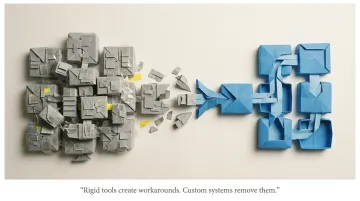
Some businesses find that no standard tool fits. Companies in regulated industries, those with highly unique fulfilment logic, or operations teams running complex multi-location workflows often discover that even the most configurable off-the-shelf platforms create workarounds rather than solutions. The cost of those workarounds compounds as the business scales.
Keel is the alternative for these situations: a code-first operations platform that lets fast-moving teams build fully custom inventory management, order management, and fulfilment systems in weeks—without resorting to a legacy ERP. Unlike rigid SaaS tools, Keel lets teams own their data models, integrate with any existing stack, and evolve workflows without months of dev work.
The platform was built by the former CEO, CTO, and CPO of Echo — Europe's fastest-growing online pharmacy, later acquired by Pharmacy2U — who faced this exact problem at $130 million annual revenue. Off-the-shelf options couldn't meet the demands of a regulated pharmacy operation shipping 50,000 medicines to 600,000 customers daily.
Forced to build their own tooling, the team saw first-hand how owning custom operations software created a genuine competitive advantage. That experience is what Keel was built on.
Keel suits operations that have outgrown off-the-shelf flexibility and need the control of custom software — without the overhead of building from scratch, such as UK consumer goods, food and drink, and health and beauty brands selling across several channels. With Build for Me, the Keel team models the platform around your actual business process, you're live in a matter of weeks, and ownership is handed over to your team. Keel is built by a UK-registered company and lets you choose where your data is hosted, including the UK, through multi-region data residency. Teams well-served by standard tools will find it unnecessary.
Conclusion
Match your tool to your marketplace mix, sync requirements, and 12-month growth trajectory. Prioritise reliability and integration depth over feature counts — real-time sync is now the baseline for high-velocity operations, and scheduled polling creates dangerous gaps during peak periods.
If you're reassessing your current setup, these are the signals that typically mean it's time to move on:
- Overselling or stockouts caused by sync delays across channels
- Manual workarounds propping up workflows your tool can't handle natively
- Integration gaps that block new marketplace or 3PL connections
- No ability to customise logic around your fulfilment rules or SKU structure
Standard tools work well until they don't. When your workflows have outgrown what's available off the shelf, explore what Keel makes possible.
Frequently Asked Questions
What is multi-channel inventory management?
Multi-channel inventory management is the process of tracking and synchronising stock levels across all sales channels—marketplaces, DTC stores, wholesale, and physical retail—from a single centralised system, ensuring every channel shows accurate availability in real time.
What is the best multi-channel inventory management software?
The best tool depends on your size and channel mix. Linnworks and Cin7 lead for complex or high-volume operations, Brightpearl suits mid-market retailers, and Zoho Inventory is a strong budget option. For UK sellers, Veeqo publishes £ pricing by order volume, and ChannelGrabber offers Royal Mail, Hermes, DPD and OnBuy integrations. Check VAT-ready accounting links before choosing.
What is the difference between real-time sync and scheduled sync?
Real-time (event-driven) sync updates inventory across all channels within seconds of a sale, while scheduled sync updates at set intervals (e.g., every 15–30 minutes). The gap matters most during flash sales or peak periods where even a brief delay can result in overselling incidents.
How does multi-channel inventory management software prevent overselling?
When a sale occurs on any connected channel, the software immediately deducts the sold quantity from a central inventory count and pushes the updated figure to all other platforms—preventing the same unit from appearing as available on multiple channels simultaneously.
What features should I prioritise when choosing multi-channel inventory management software?
Prioritise sync reliability (real-time vs. scheduled), native integrations with the marketplaces you sell on (Amazon UK, eBay, OnBuy, TikTok Shop, your web store), bundle and kit support, multi-warehouse capabilities, UK carrier integrations, and accounting integration with Xero, Sage or QuickBooks that posts the correct VAT, before comparing pricing.
When should a business consider building a custom inventory management system instead of buying off-the-shelf software?
Custom builds make sense when a business has highly specific workflows, operates in a regulated industry, or has outgrown what rigid SaaS tools can handle without expensive workarounds. Platforms like Keel let operations teams build tailored inventory systems in weeks using a code-first schema, skipping the cost and timeline of a full ground-up build.
Which inventory management software syncs Shopify, Amazon and eBay at the same time?
Most dedicated multichannel tools do, including Linnworks, Brightpearl, Cin7, Zoho Inventory, Veeqo and ChannelGrabber. The difference is how fast they sync: event-driven tools update every channel within seconds of a sale, while scheduled tools such as Zoho Inventory sync at intervals. If you sell at high volume or run promotions, choose real-time sync.
Is Linnworks suitable for small multichannel retailers?
Linnworks is built mainly for higher-volume sellers, with 100+ integrations, multi-warehouse support and an automation rules engine, and it prices by quote. Small UK retailers can use it, but may find tools with published tiered pricing, such as Veeqo (from £17 a month for up to 1,000 orders) or Zoho Inventory, easier to start with. Compare cost at your peak order volume.
Does Cin7 connect online marketplaces with physical retail?
Yes. Cin7 combines multichannel stock management for channels such as Amazon, eBay and Shopify with a built-in POS, a B2B ordering portal and warehouse management, so online, wholesale and in-store stock share one system. If you also sell through WooCommerce or OnBuy, confirm the integration on Cin7's current integrations page before you buy.
How do you stop overselling during Black Friday and other peak sales?
Use real-time (event-driven) sync rather than scheduled sync, and set stock buffers on best-sellers before peak starts. Also check that bundles deduct component stock, returns are restocked promptly, and cycle counts are up to date. Load-test your order volume in advance, and confirm UK carriers' collection capacity and last posting dates for Christmas.
Which multichannel inventory software works with Royal Mail and OnBuy?
ChannelGrabber's own site lists integrations with Royal Mail, Hermes and DPD, and an OnBuy integration, making it a common choice for UK sellers. Other tools support UK carriers and marketplaces to varying degrees, so check each vendor's current integrations list for the exact carriers and channels you use, and whether tracking numbers flow back to the marketplace.
How does VAT work when you sell through online marketplaces in the UK?
It depends on the sale. Online marketplaces can be responsible for accounting for VAT on some sales made through them, while on other sales the seller remains responsible. Your inventory and accounting software should record each sale's channel and VAT treatment so returns reconcile. Check HMRC's guidance on GOV.UK and confirm the treatment with your accountant.